
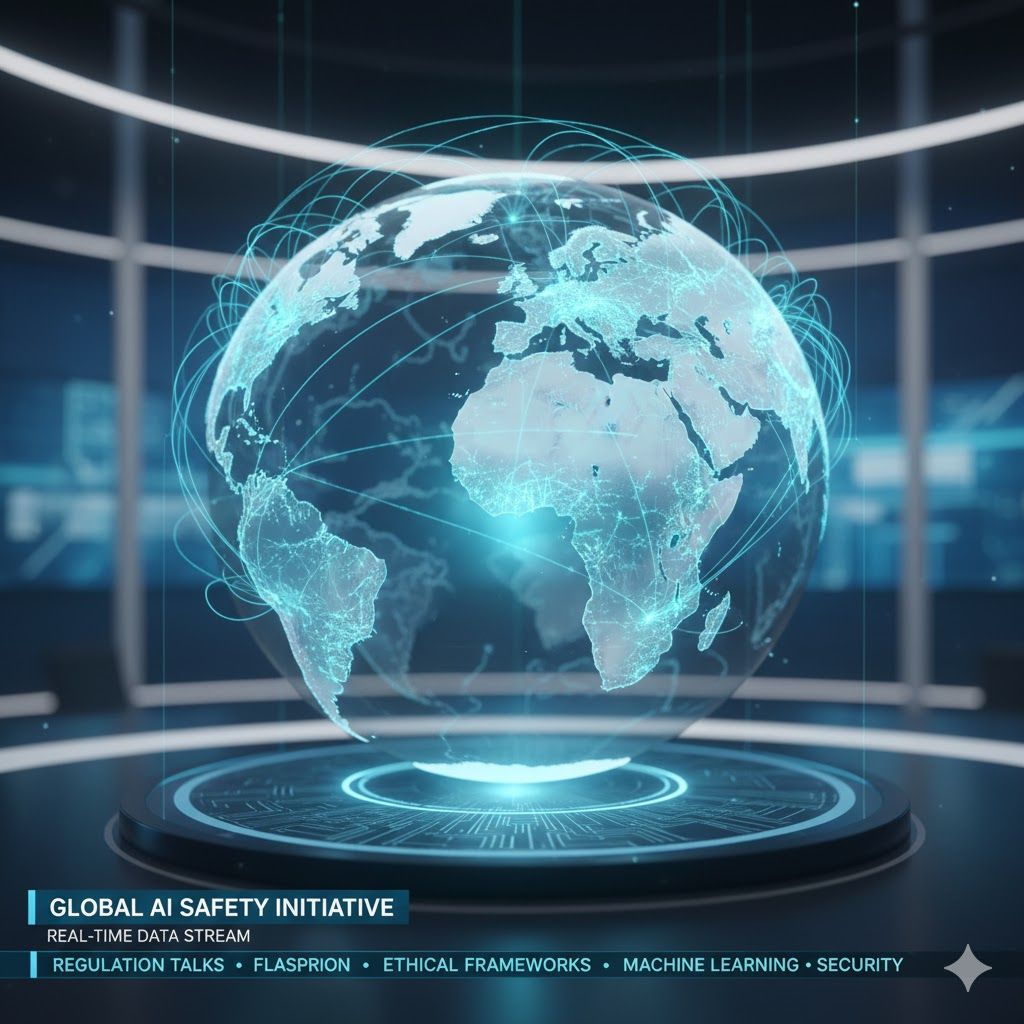
AI safety is no longer just a topic for tech insiders. In 2025, it has become a global headline. From Washington to Riyadh and from London to Tokyo, governments and major companies are now treating AI risks as national-level concerns.
One of the biggest reasons behind this sudden rise in attention is misinformation. Deepfake videos and AI-generated images have made it hard for people to trust what they see online. Elections, global conflicts, and financial markets are now directly affected by fake digital content.
Another major factor is automation. Many industries are adopting AI tools to replace manual work, leading to new debates about job security. While AI promises faster and cheaper production, workers fear uncertainty about the future.
Countries are responding. The United States has introduced stronger regulations to monitor high-risk AI tools. The European Union is finalizing strict transparency rules. Gulf countries, especially Saudi Arabia and the UAE, are investing heavily in safe and ethical AI systems to support their digital economies.
Tech companies are also shifting their priorities. Instead of competing only for speed, they are now competing for trust. Firms are investing in safety teams, responsible development, and protective tools to ensure AI systems do not cause harm.
The global focus is clear: AI must grow, but it must grow responsibly.
2025 may be remembered as the year when the world finally took AI safety seriously.