
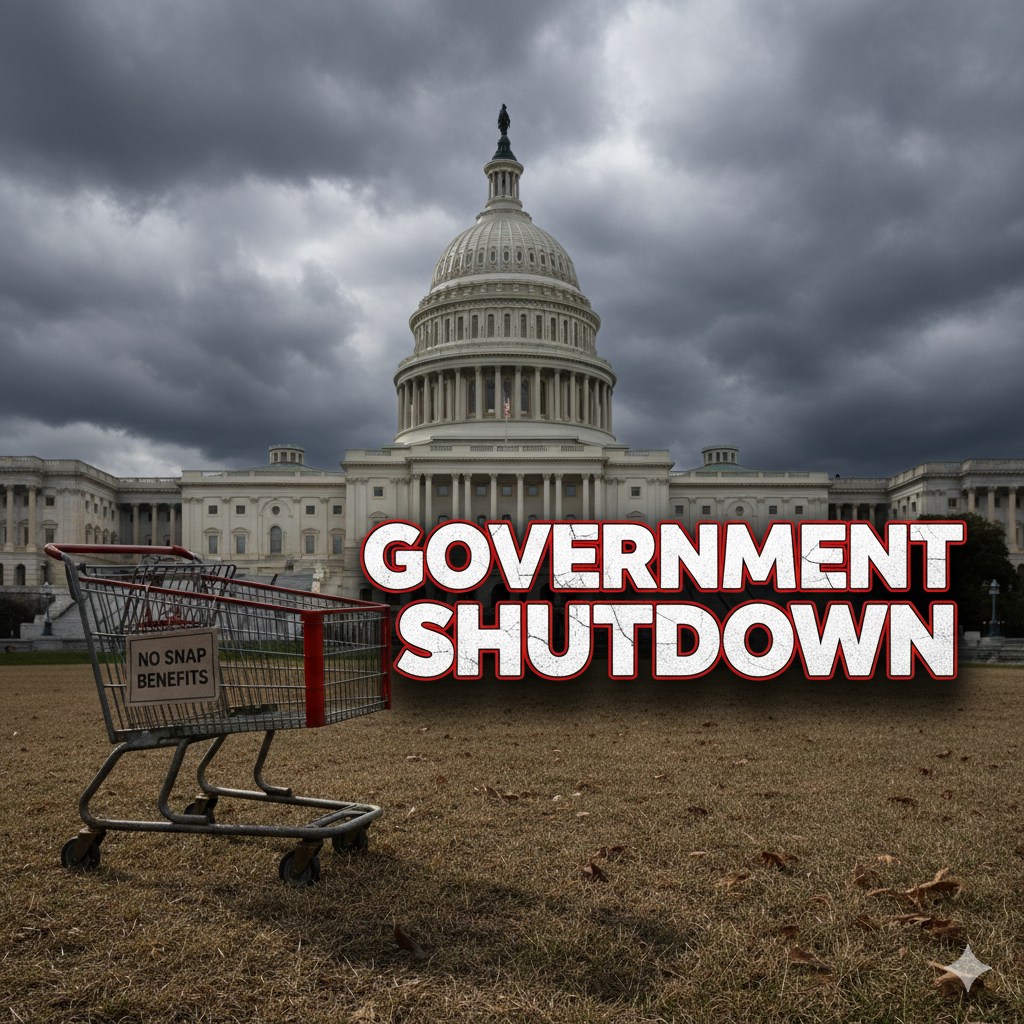
U.S. Shutdown Reaches Sixth Week as Supreme Court Blocks Full SNAP Payments
The United States is now deep into its sixth week of a government shutdown, and the political pressure in Washington has reached a boiling point. What was already a difficult situation for federal workers and public programs has turned even more serious after the Supreme Court issued a temporary block on full SNAP payments.
The timing could not have been worse. Millions of low-income families depend on the Supplemental Nutrition Assistance Program (SNAP) for their monthly groceries. With the shutdown slowing government operations and the Court restricting full distribution, many households are now uncertain about what the next month will look like.
A Growing Crisis for Families
SNAP is one of the largest food-aid programs in the country. During a shutdown, funds are already stretched thin. The Supreme Court’s decision adds another layer of strain by limiting how much support can be released until the legal review is complete.
Food banks have reported rising foot traffic, and community groups warn that the pressure may increase if the political deadlock continues. The situation has highlighted just how quickly a political stalemate can spill over into the lives of ordinary citizens.
Political Battle Deepens
Lawmakers from both parties have blamed each other for the prolonged shutdown. Negotiations have stalled as each side pushes for its own priorities, leaving essential programs caught in the middle. With no deal in sight, economists warn that extended government inactivity could start harming broader economic activity.
Meanwhile, the Supreme Court’s intervention has triggered a new national debate about how much authority federal agencies should have during a shutdown, especially when handling essential welfare programs.
Uncertain Road Ahead
Unless Congress reaches a funding agreement soon, the situation is likely to worsen. Families relying on SNAP may need to prepare for more disruption, and government workers will continue working without clear answers.
For now, the country waits for Washington to break the deadlock. But after six long weeks, patience across the nation is running thin.